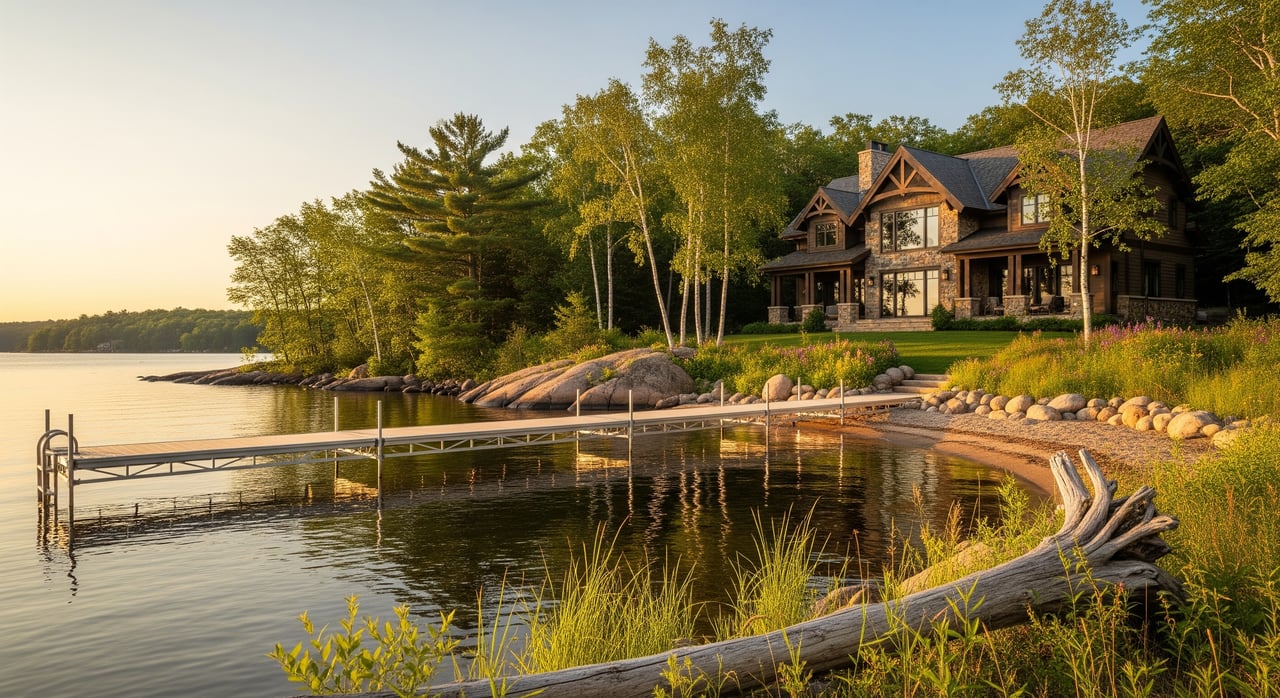
Dreaming of a place on Lake Bemidji or one of our nearby lakes, but unsure how shoreland rules might affect your plans? You are not alone. Shoreland laws protect Minnesota’s lakes, and they can shape everything from where you build to the type of dock you can install. In this simple guide, you will learn who sets the rules, what to check before you buy, and how to avoid common surprises. Let’s dive in.
Who sets the rules in Bemidji
Minnesota sets statewide standards, and local governments apply and enforce them. The Minnesota Department of Natural Resources provides the Shoreland Management program, plus tools and guidance that local staff use to manage parcels near public waters. You can review the program overview on the DNR’s shoreland page for definitions and best practices. Visit the DNR’s shoreland guidance to understand the basics of classification and minimum standards at the state level.
Local ordinances control day-to-day permitting. Beltrami County and the City of Bemidji have their own zoning and shoreland rules that must meet or exceed state minimums. For parcel-specific guidance, contact Beltrami County Planning and Zoning or the City of Bemidji Planning Department if the property is inside city limits. These offices confirm setbacks, lot coverage, and permit steps for your exact address.
State rules live in Minnesota Rules Chapter 6120, which sets the framework local codes follow. If you want to see the underlying state standards and definitions, review Minnesota Rules Chapter 6120.
A key map and data source is the DNR’s LakeFinder. It shows whether a lake or river is a mapped public water, provides ordinary high-water level information, and lists lake classifications that affect setbacks and uses. Start your research with DNR LakeFinder to confirm the lake’s status and basic details.
- DNR Shoreland Management overview: https://www.dnr.state.mn.us/shoreland/index.html
- DNR LakeFinder: https://www.dnr.state.mn.us/lakefind/index.html
- Minnesota Rules, Chapter 6120: https://www.revisor.mn.gov/rules/6120/
- Beltrami County: https://www.co.beltrami.mn.us/
- City of Bemidji: https://www.ci.bemidji.mn.us/
Start with maps and definitions
Before you fall in love with a cabin or lot, confirm two basics.
- Ordinary high-water level, often called OHWL, is the reference line from which many setbacks are measured. You will see OHWL notes in LakeFinder, and local staff can help you place it on a survey for your parcel.
- Shoreland district and lake classification determine what you can build and where. Shoreland usually includes land within a set distance from the OHWL of public waters. Lakes are classified, and those classes guide minimum setbacks and uses under local ordinances.
Use DNR LakeFinder to verify the waterbody and classification, then ask county or city planning staff to confirm your parcel’s shoreland zoning.
Key rules that affect your plans
Setbacks from the water
Setbacks set the minimum distance between the OHWL and structures like your home, garage, and deck. The required setback depends on the lake’s classification and the local ordinance. This directly shapes your building envelope and remodeling options.
What to do next:
- Ask the seller for an as-built survey that shows the OHWL and structure locations.
- Confirm with Beltrami County or the City of Bemidji whether any buildings are nonconforming or have recorded variances.
Lot size, width, and impervious surface limits
Local shoreland codes set minimum lot area and width, and they limit how much of a lot can be covered by impervious surfaces such as roofs, driveways, and some patios or decks. These limits protect water quality and can affect whether you can add a garage, expand a driveway, or redo a patio.
What to do next:
- Ask planning staff for the maximum impervious surface allowed for your parcel and lake class.
- Verify if the current site already exceeds that limit and whether past expansions were permitted.
Vegetation, shore impact zones, and buffers
Shoreline vegetation controls keep the near-shore area stable and the water clean. Many ordinances define a shore impact zone, the area closest to the water where tree removal, grading, or shoreline alterations are limited. Native buffers are often encouraged and sometimes required.
What to do next:
- Request records of any shoreline restoration, buffer requirements, or mitigation tied to the property.
- Speak with local staff about permitted ways to open a view corridor without causing violations.
Docks, boat lifts, and boathouses
If you plan to install or change a dock or lift, rules may apply at both the state and local levels. The DNR regulates in-water structures on public waters, and counties or cities may add requirements. Permanent boathouses are more restricted than seasonal docks.
What to do next:
- Review the DNR’s guidance on docks and related structures to understand general limits and when permits are needed.
- Check with Beltrami County or the City of Bemidji to confirm local permitting for your specific shoreline. If a dock or boathouse already exists, ask for permits and any recorded easements.
You can start with DNR dock guidance for statewide information.
Septic systems and wells
Septic systems are a big deal around lakes. Systems near shorelines must meet siting and performance standards. Failing or nonconforming systems can block building permits or require expensive upgrades.
What to do next:
- Obtain the date and results of the last septic inspection, the permit history, and the locations of the tank and drain field.
- Contact county environmental staff to confirm replacement options and likely costs before you close. For general background on how septic systems work and why maintenance matters, review the EPA’s onsite systems overview.
Remodeling, replacement, and nonconforming homes
Many classic lake cabins sit closer to the water than today’s rules allow. These are often labeled nonconforming. You can usually maintain and repair them, but expansions or full replacements are more limited and may require a variance.
What to do next:
- Ask planning staff to confirm the home’s status and what is allowed if you want to remodel or rebuild.
- Gather any existing variances or conditional use permits on file and confirm whether they run with the land.
Permits, variances, and enforcement
Most shoreland work requires permits, and some projects need approvals from both local government and the DNR. Variances are possible in certain cases, but they require a formal process and findings.
What to do next:
- Build time into your schedule for permit review and, if needed, public hearings.
- Request copies of permits and any enforcement history from the county or city, and verify there are no open violations.
Buyer due diligence checklist
Use this quick list to keep your purchase on track.
- Confirm waterbody details in DNR LakeFinder, including public waters status, OHWL information, and lake classification. Access DNR LakeFinder here: https://www.dnr.state.mn.us/lakefind/index.html
- Call Beltrami County Planning and Zoning, or City of Bemidji Planning if in city limits, to get parcel-specific setbacks, lot coverage limits, shore impact zone rules, and permit requirements. County: https://www.co.beltrami.mn.us/ City: https://www.ci.bemidji.mn.us/
- Ask the seller for an as-built survey. If none exists, order one to accurately place setbacks from the OHWL.
- Septic due diligence: obtain inspection records, order a current inspection if needed, and confirm replacement feasibility and costs with county environmental staff. For general context, review EPA septic basics: https://www.epa.gov/septic
- Docks and shore structures: verify existing permits and whether your planned changes need local or DNR approvals. Start with DNR dock guidance: https://www.dnr.state.mn.us/permits/water/docks.html
- Check for deed restrictions, conservation easements, or recorded shoreline restoration agreements.
- Gather all historic permits, photos, and shoreland compliance documents; confirm any variances are recorded with title.
- Plan for permitting timelines when setting closing dates and construction schedules.
How rules play out in common scenarios
- New home on a lakeshore lot: expect a layered review. Your building envelope depends on OHWL placement, setbacks, lot coverage limits, and septic area siting. Coordinate early with county or city planning to avoid redesign.
- Replacing or expanding a cabin: if the home is nonconforming, you may be limited to the existing footprint or a controlled amount of expansion. Variances are sometimes possible, but they take time and a strong case.
- Installing or replacing a dock: seasonal docks may be straightforward, while larger or permanent structures face stricter standards. Confirm both DNR and local requirements before ordering equipment.
- Opening a lake view: thinning and selective pruning within the shore impact zone is often more acceptable than clearing. Work with staff on best practices and mitigation that protect the shoreline and meet code.
- Small or narrow lots: these properties may already be close to coverage limits and can be challenging for septic replacement. Verify feasibility before you fall in love with big expansion plans.
Local resources you can trust
If you take only one step today, bookmark these official sources. They are the quickest way to confirm what is possible on a specific Bemidji-area parcel.
- DNR Shoreland Management overview: https://www.dnr.state.mn.us/shoreland/index.html
- DNR LakeFinder for public waters and OHWL info: https://www.dnr.state.mn.us/lakefind/index.html
- DNR docks and in-water structures guidance: https://www.dnr.state.mn.us/permits/water/docks.html
- Minnesota Rules, Chapter 6120 (state standards): https://www.revisor.mn.gov/rules/6120/
- Beltrami County Planning and Zoning: https://www.co.beltrami.mn.us/
- City of Bemidji Planning and code resources: https://www.ci.bemidji.mn.us/
- EPA onsite septic overview: https://www.epa.gov/septic
Buying a lake property should feel exciting and doable, not confusing. With the right checks up front, you can plan your dock, deck, or remodel with confidence and protect the lakes we love. If you want a calm, local guide to help you weigh options and coordinate due diligence, reach out to Wendy Steinmetz for thoughtful, step-by-step support.
FAQs
How far from the water can I build in Beltrami County?
- Setback distances depend on the lake’s classification and your local shoreland ordinance, so confirm OHWL placement, then verify setbacks with Beltrami County or the City of Bemidji planning staff.
Do I need a permit for a dock on Lake Bemidji?
- Often yes, because both the DNR and local government may regulate docks and in-water structures, so review DNR dock guidance and check local permitting before installation.
Can I clear trees for a lake view on a Bemidji property?
- Vegetation removal in the shore impact zone is limited, and selective thinning with native buffers is generally preferred, so coordinate with local staff on permitted methods and any needed mitigation.
What if the existing lake home is nonconforming under today’s rules?
- You can usually repair and maintain it, but enlargements or full replacements are restricted and may require a variance, so ask planning staff to confirm what is allowed for your specific parcel.
Who handles septic inspections near Lake Bemidji?
- County environmental or public health staff handle septic permitting and inspections, so obtain a current inspection report and confirm replacement options with them before closing.