Thinking about buying a lake home or rural property near Bemidji? One of the biggest surprises for buyers is that utility service can change from one parcel to the next, even when homes are close together. If you understand the basics before you close, you can avoid costly surprises and feel more confident about what comes with the property. Let’s dive in.
Why utilities vary in Bemidji-area homes
In the Bemidji area, utilities are often address-specific, not uniform across a neighborhood. Inside the City of Bemidji, Public Works operates municipal water, sanitary sewer, and refuse pickup for city residents. Outside city limits, and on many lake or country properties, homes often rely on private wells, septic systems, propane, and internet service that must be verified at the exact address.
That matters because two homes that look similar may function very differently behind the scenes. Your monthly costs, maintenance responsibilities, inspection needs, and winter planning can all change depending on whether a home uses city utilities or private systems.
Start with city or private utilities
Before you get too far into a showing or purchase, ask one simple question: Is the home on municipal utilities or private systems? That answer shapes almost every other utility conversation.
For a city-served property, your setup may be more straightforward. For a rural or lake property, you may need to confirm well details, septic compliance, propane service, and internet access separately. In the Bemidji and Beltrami County market, that extra step is normal.
Private well basics for buyers
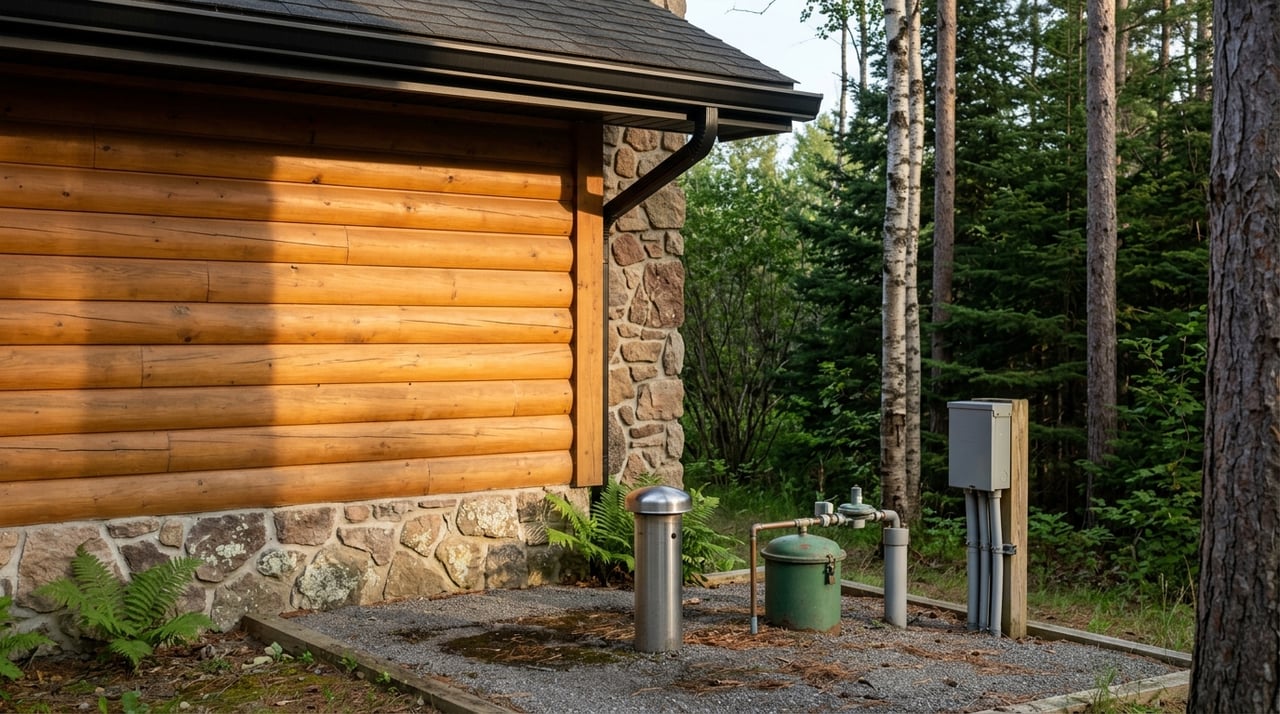
If a home has a private well, the owner is responsible for testing and upkeep. Minnesota Department of Health guidance recommends testing for coliform bacteria every year and nitrate every other year. It also recommends testing for arsenic and lead at least once.
A private well does not have to be tested by the state at the time of transfer, but some lenders may require testing. That means you should not assume clear-looking water tells you everything you need to know.
What to ask about a private well
When you are reviewing a Bemidji lake or rural home, ask for practical details such as:
- Where the well is located
- When the water was last tested
- What the test results showed
- Whether there is water treatment equipment
- Whether there is any history of a sealed well on the property
Minnesota also requires a well disclosure in a real estate transfer. That disclosure must be available before a purchase agreement is signed, and well information is also needed for the deed and recording process.
Sealed wells matter too
If a seller says an old well was sealed, that should mean there is a sealing record on file. Simply capping a well is not the same as sealing it. This is an important distinction for buyers who want clear property records and fewer surprises after closing.
Septic systems in Beltrami County
In most unincorporated parts of Beltrami County, septic systems are regulated by the county. Construction, installation, modification, and operation of a subsurface sewage treatment system require a permit. The county also requires compliance inspections when property is transferred, when a building permit is submitted, and when an existing system is repaired or reused.
For buyers, that means a septic system should be treated as a serious part of your due diligence. It is not something to leave to guesswork or informal repair plans.
Shoreland properties have added rules
If you are buying on or near a lake, there can be additional shoreland sanitation standards. Beltrami County’s shoreland rules state that publicly owned sewer systems must be used where available. When a property uses an on-site sewage system, it must meet setback and siting standards related to the ordinary high water level and nearby wells or water supplies.
That is one reason lake properties often need closer review. The location of a septic system, and whether it meets current standards, can affect future use, repairs, and updates.
Septic work should involve licensed professionals
Beltrami County requires licensed professionals for septic installation, design, and inspection work. For you as a buyer, that means the right path is to review compliance paperwork and rely on qualified professionals, not quick fixes.
If a home is on septic, ask for the permit and compliance history early. That can save time and help you understand whether any next steps may be needed.
Propane is common in rural homes
In rural areas around Bemidji, propane is a common fuel source, especially where other heating options are limited or more expensive. It is often used for home heating in winter, but it may also power water heaters, cooking appliances, and clothes dryers.
Because propane use tends to rise during colder months, it helps to understand how the system works before your first winter in the home. A little planning can go a long way.
What to ask about propane service
For a propane-served home, try to confirm:
- Which appliances run on propane
- How often the tank is typically filled
- Which company handles delivery
- Who provides service if there is a problem
- Whether the current owner uses a budget plan
Minnesota Commerce advises consumers that propane is often less expensive in summer and early fall than during peak winter demand. The state also says propane distributors must offer a budget plan to customers who want one.
Keep safety in mind
Minnesota Public Safety notes that LP gas is propane and that it is heavier than air. If there is a leak, it can collect in lower areas and create a safety hazard. That is another reason to understand the setup, know your supplier, and use qualified service professionals.
Internet should be checked by exact address
Internet is one of the easiest things to assume and one of the most important things to verify. In Bemidji, some areas have strong service options, including fiber in certain locations. But lake lots and rural parcels can vary a lot.
The key point is simple: do not check internet by ZIP code alone. Availability needs to be confirmed at the specific property address.
How to verify connectivity
The FCC National Broadband Map is address-specific for fixed broadband and mobile coverage. It can show options such as fiber, cable, DSL, satellite, fixed wireless, and mobile coverage. The FCC also notes that real-world service can vary based on terrain, devices, and network capacity.
In the Bemidji area, provider availability also depends on location. Paul Bunyan Communications says its all-fiber network reaches more than 60,000 locations in its current territory, and Midco lists Bemidji among its Minnesota service areas, but serviceability still has to be checked by address.
For a buyer, the practical move is to verify the exact address before closing. That step matters even more if you work from home, stream often, or plan to spend extended time at a lake property.
A simple utility checklist before closing
Before you close on a Bemidji lake or rural home, it helps to slow down and confirm the basics. A short utility review can make your first season in the property much smoother.
Here is a practical checklist to keep in mind:
- Confirm whether the home uses city utilities or private systems
- Review the well disclosure and recent water test information
- Ask for septic compliance records and permit history
- Identify the propane supplier and refill expectations
- Verify internet service at the exact property address
These are not minor details. In many Bemidji-area homes, utilities play a big role in how the property functions day to day.
Why this matters for lake and rural buyers
A great property is not just about the view, the lot, or the cabin feel. It is also about whether the systems that support daily life are understood, documented, and workable for your plans.
When you know what questions to ask, you can move forward with more clarity. That is especially true in Beltrami County, where utility setups often differ from parcel to parcel.
If you are comparing homes around Bemidji, lake communities, or rural areas nearby, having a calm, local guide can make these details easier to sort through. If you want help navigating the local market with clarity and care, connect with Wendy Steinmetz.
FAQs
What utilities are common in rural Bemidji-area homes?
- Many rural and lake-area homes around Bemidji use private wells, septic systems, propane, and address-specific internet service rather than full city utility service.
What should buyers ask about a private well in Beltrami County?
- You should ask where the well is located, when the water was last tested, what the results showed, whether treatment equipment is installed, and whether any old well was properly sealed.
What septic records matter for a Beltrami County home purchase?
- Buyers should ask for septic compliance inspection information, permit history, and confirmation that any needed design, installation, or inspection work involved licensed professionals.
Why is propane important to review before buying a rural home near Bemidji?
- Propane may power heating, hot water, cooking, or drying, so it helps to know the supplier, refill schedule, service contacts, and expected winter planning needs.
How should buyers check internet availability for a Bemidji lake home?
- Buyers should verify internet at the exact property address because service can vary widely by parcel, even within the same ZIP code or general area.